Derila Ergo, Sleep Apnea & Neck Pain: Separating Marketing From Medicine
Some Derila Ergo ads lean heavily on sleep apnea language. Here's the honest, unhyped version of what a pillow can — and can't — do for your airway and your neck.
What the Posture-and-Airway Claim Actually Means
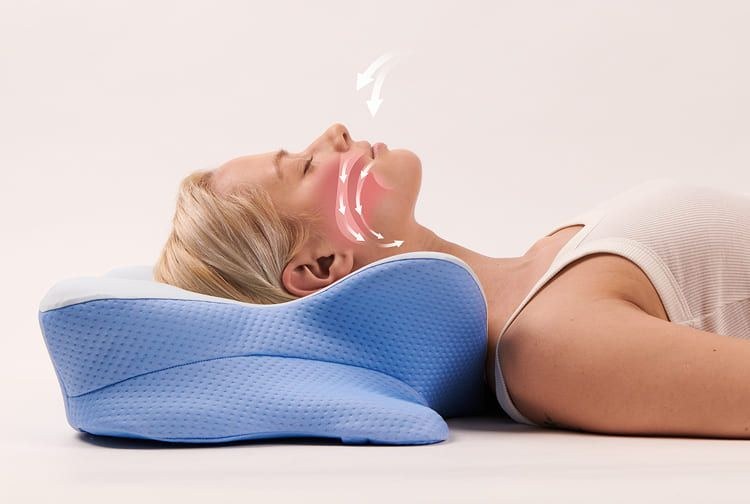
The reasoning behind the marketing isn't baseless: sleeping with your neck bent too far forward or backward can partially restrict the airway and make snoring worse for some people. A pillow that keeps your head and neck in a more neutral position may, in theory, help a little with mild, posture-related snoring.
That is a very different claim from "helps sleep apnea." Obstructive sleep apnea involves the airway collapsing due to muscle relaxation and anatomy — not just pillow height — and it typically won't be meaningfully changed by a pillow alone, regardless of shape.

What Pillow Do Most Chiropractors Recommend?
There's no single pillow that every chiropractor endorses by name — the "right" pillow depends on your usual sleep position, mattress firmness, and any existing neck or shoulder issues. That said, a few general principles come up consistently in chiropractic guidance:
- Keep the neck in a neutral position — not tilted sharply up or down
- Match pillow loft (height) to your sleep position: lower for stomach sleeping, higher for side sleeping
- Favor a pillow that holds its shape through the night rather than flattening
- Replace pillows that have visibly compressed or lost support, typically every 1–2 years
Contoured cervical-support pillows — the same broad category as the Derila Ergo — are generally the type chiropractors point to over flat, overstuffed pillows, specifically because they're designed around that "neutral neck" principle. That's a category-level point, not a specific endorsement of this brand.
Can It Help With Everyday Neck Pain?
If your morning stiffness comes from a flat, worn-out pillow letting your head sink or tilt overnight, switching to a structured, contoured pillow like the Derila Ergo can genuinely reduce that mechanical strain for a lot of people — that's a reasonable, achievable claim.
If your neck pain is chronic, radiates down an arm, or follows an injury, a pillow change is not a substitute for seeing a doctor, physical therapist, or chiropractor. Use it as one part of a broader sleep and posture routine, not a stand-alone fix.
If You Already Use a CPAP or BiPAP Machine
A few independent user comments we reviewed mentioned that the pillow's contour or loft interfered with their CPAP/BiPAP mask seal. If you rely on a machine for diagnosed sleep apnea, test any new pillow carefully — mask fit is individual, and what works for one person's mask and face shape may not work for another's. When in doubt, check with your sleep physician or durable medical equipment provider before relying on a new pillow for a full night.
Want Better Neck Support Tonight?
See the current bundle pricing and the 60-day return window on the official order page.
See Current Price →